
You may not realize that a single mature tree weighs more than 20,000 pounds – and when it fails, it usually takes just a few seconds. That statistic is no idle fact for Bronx homeowners who are surrounded by the borough’s century-old street trees, backyard oaks and storm-battered maples. Sitting just a few feet away from the house, driveway or where kids wait for the school bus is a real risk. From the aging urban canopy, soil compaction, road salt application, and a changing climate, trees throughout the Bronx are facing more stressors than most people realize. However, the issue is that trees can often die without warning, with healthy leaves until one day they don’t.
Knowing what to look for can mean the difference between a routine trim and a call to 911. Whether the tree is located in the growth canopy of Riverdale or the compact lots of Throggs Neck and Pelham Bay, certified arborists find themselves looking for the same few major red flags before advising removal. Here are seven signs that a tree isn’t just struggling. it’s a hazard tree that needs to come down before it decides for you.
1. Deep, Vertical Cracks in the Trunk
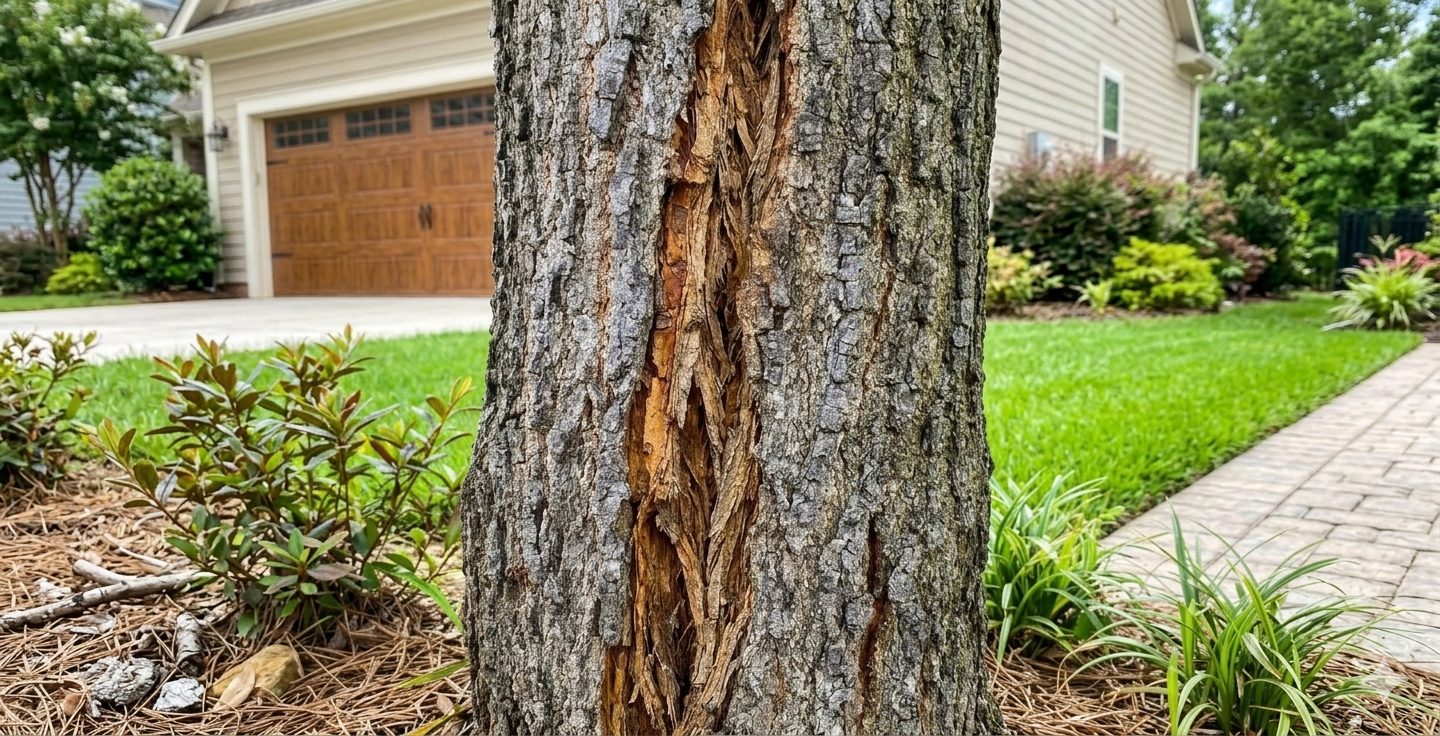
A healthy trunk should be solid and continuous from root flare to crown. If you see a long, straight crack that extends deep into the wood or is a forked split, it’s not just a cosmetic issue, but rather a structural failure in progress. Most of these cracks occur after frost damage, lightning or from the internal pressure formed when the decay advances and is pushing outward against the bark.
A trunk crack indicates that the structure of the tree has already been disrupted in the trunk, and that a tree cannot compartmentalize and heal over damage to the trunk and cannot be restored to that condition by any amount of pruning or bracing or fertilizing. Should the crack open up more in a windy day, or you notice the crack moving in the wind when the tree moves, this is a good indication that the failure point may not last long.
2. Fungal Growth at the Base or on the Trunk
A growing mushroom, shelf fungi or conks at the root flare, or along the bark, is rarely a cosmetic concern. They’re the visible signs of wood decay occurring within the tree as a result of the digestion of the tree’s cellulose and lignin from within out by fungal pathogens. When you see fungal fruiting bodies above ground, there is most likely a lot of root rot or heartwood rot going on below your feet. The reason arborists don’t ignore fungal growth as a mere blotched tree is the fact that while the tree may appear to be fully leafed out and green, underneath it may be structurally hollow.
Common culprits in the Northeast include Ganoderma and Armillaria species, both of which are strongly associated with accelerated structural failure once colonies become established at the base.
3. Leaning That Wasn’t There Before
But many trees have a leaning habit and, provided the leaning is not severe, it may not be dangerous; many trees have a permanent, stable lean and have been doing this for decades. It is the sudden lean, one that is brand new or getting worse or has exposed roots on one side of the base, cracked pavement or heaving soil, that counts. Typically, this indicates root deterioration from extended periods of root damage due to sidewalk and utility maintenance work in older neighborhoods, construction activity or saturated soils following heavy rainstorms in Bronx.
When you see the tree leaning for the first time, you are being warned that its anchorage is failing, and the likelihood of it being blown over completely rises with each successive windy day as the nor’easters and summer storms that regularly pass through the borough keep coming.
4. Large Dead Branches or a Thinning Canopy
One of the most obvious signs of tree decline is deadwood throughout the crown, particularly large diameter dead branches with leaves on them during the growing season. If over half of the canopy is involved or if dead limbs are mainly on one side of the tree it is typically indicative of a more serious problem such as vascular disease, insect damage or a root system no longer able to provide sufficient water and nutrients to the upper branches.
These branches do not only fall during storms, but can fall on a calm, windless day when the wood dries out and weakens at the point of attachment, making it a year-round hazard. This is one of the reasons why it is advisable to have older trees professionally inspected for canopies on a yearly basis, especially trees that are close to driveways or entry paths.
5. Cavities, Hollow Sounds, or Extensive Trunk Damage
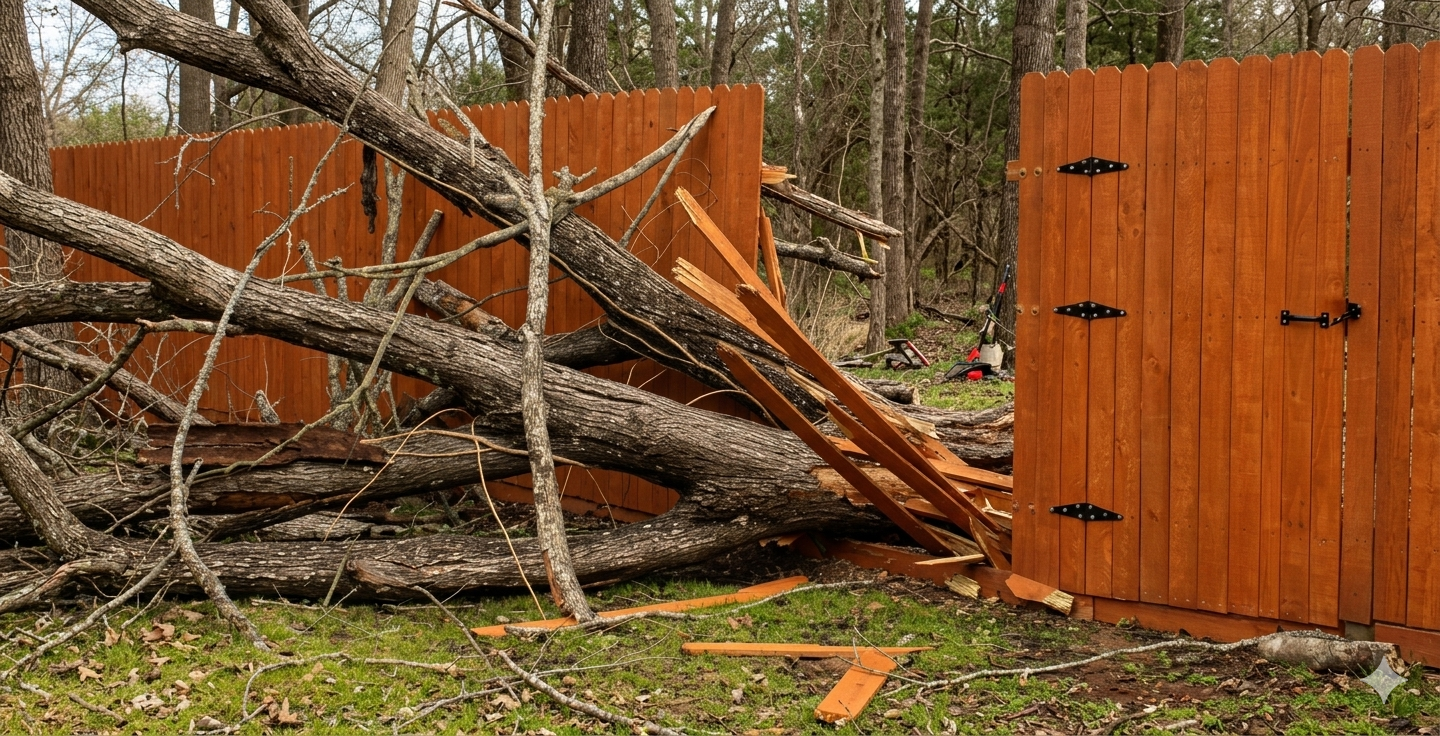
Use a hammer or sturdy stick to tap the trunk of a tree of concern. If it doesn’t thud with a solid sound, but is dull and hollow, it may be because there is a lot of internal cavitation. The extent of the visible hollow spaces, particularly in the vicinity of the base where the tree has the greatest structural stress and wind resistance, has a significant negative effect on the amount of solid wood that is available to withstand these forces. These cavities, in conjunction with old wounds, bark inclusion (two branches growing very close together) or old storm damage and damage caused by vehicles that did not heal over with new bark growth, are commonly found locations that weaken quickly and fail catastrophically.
Even if only a small, visible cavity is found in a tree, there may be a large amount of hidden decay running through the interior of the trunk, and sound testing and in some instances resistograph testing, are a formal part of a thorough tree risk assessment.
6. Proximity to Power Lines, Structures, or High-Traffic Areas
Even a moderately hazardous tree becomes an urgent priority when its fall zone contains other trees, a roofline, a sidewalk with regular foot traffic or a driveway. In the Bronx, where lots are compact and buildings are built close together, a tree has to be in the wrong position relative to everything, to be a serious liability. A falling limb or a section of trunk that comes in contact with a power line can result in an outage, electrocution risk and/or a fire, therefore removal requests involving contact with overhead lines are a high priority for both Con Edison and the NYC Parks Department. Homeowners should not take any chance of a tree falling on their property lightly, regardless of how sturdy the tree may appear.
7. Sudden Leaf Drop or Wilting Outside of Season
However, if the leaves drop off healthy trees outside of the fall season, or if the tree is wilting throughout the season during a good rainfall year, it is likely that the vascular system of the tree is under severe stress, the internal network of xylem and phloem that transports water and nutrients from roots to canopy. It may be due to extensive root injury, root damage from compression of the trunk’s base by roots, pathogenic organisms such as verticillium wilt or stress from drought conditions, exacerbated by urban heat-island and soil compaction around the root zone. One of the quickest indicators on this list is a sudden unseasonable decline, as a tree may go from looking quite healthy to being seriously unstable in a matter of weeks, rather than months or years.
Why Bronx Conditions Make This Especially Important
Trees in the Bronx are subjected to more difficult conditions than trees in rural areas, and urban trees have more difficult conditions than rural trees. But compacted urban soil, road salt runoff from winter de-icing operations, limited root space under sidewalks and driveways, air pollution, and disturbance of construction all act to hasten decline in less apparent ways. Mature trees that are perfectly stable in a parkland can be truly dangerous in Bronx front yards, just because of the environmental stress they have accumulated over the years.
That is why a professional risk assessment is so important; the above symptoms are useful signs, but only a certified arborist can assess the extent of internal damage, soil and root conditions and the need for removal or stabilization by structural pruning, cabling or specific soil treatments.
When to Act
If you’re noticing even one or two of these signs, don’t wait for the rest to appear before taking action. Tree failures don’t usually give a slow countdown; they tend to occur at once, usually during or immediately following storms, when the winds blow strong and the ground is saturated, as is often the case in the Bronx throughout the year, from spring downpours to late-summer hurricanes rolling up the coast. Early action will keep your property, family and neighbors safe from the real danger a tree in distress can pose and it’s rarely as expensive as damage cleanup following an incident.
If you feel any of these warning signs, it’s time to seek a professional opinion to avoid letting the situation get worse. BX Tree Service is knowledgeable about Bronx growing conditions, and will evaluate your tree and determine if it is necessary to remove it, as well as ensuring the job is done safely from start to finish.